Tree Stories
-
![]()
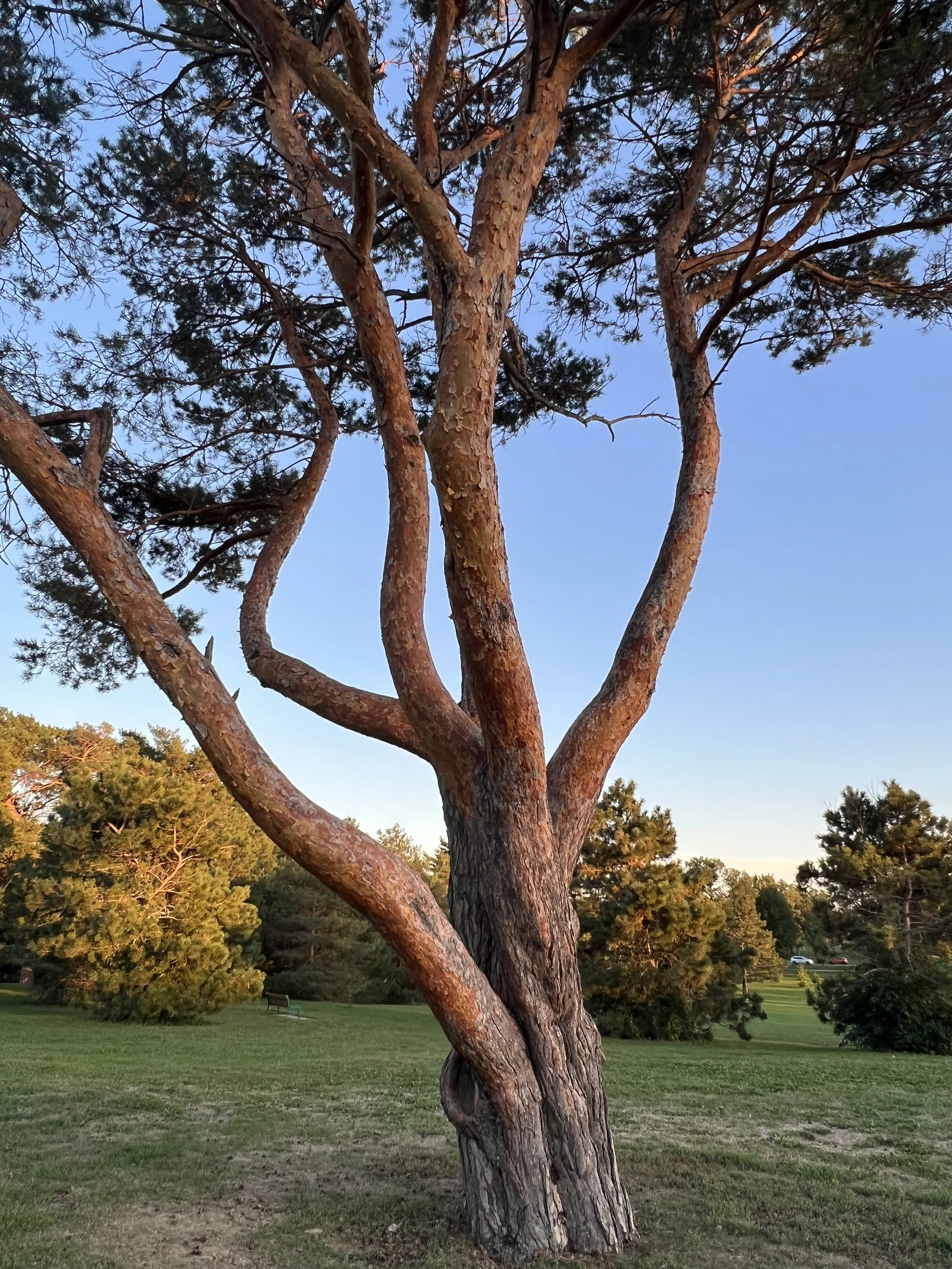
"We spend a lot of time walking our dogs in COMO Park. I fell in love with this tree the first time I saw it there and my eyes always seek it out when I am near. I have never thought about what type of tree it is, but will take a closer look this week to determine that as well. We were at the Ordway last evening for Nalini’s talk and I loved it so much! I wished my daughters and others I love could have been there as well. We were in Costa Rica in January very near to Monteverde, and the cloud forest near Mindo, Ecuador just a couple weeks ago (we are avid birders) and I was so aware of the canopy and the beauty of the epiphytes! Thank you so much for the work you do."
- C Diers - St Paul, MN
-
![]()
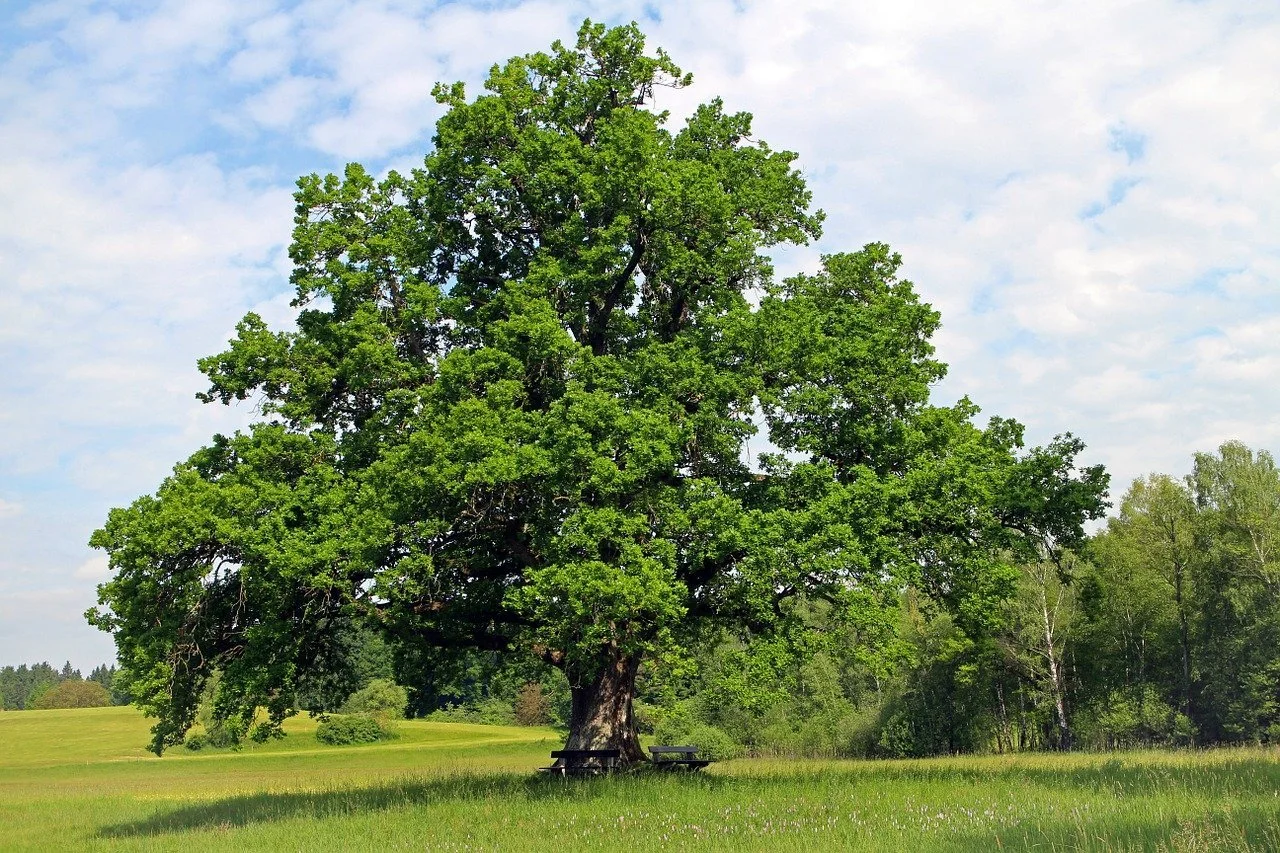
"I was at Nalini's presentation at the Ordway Center in St. Paul, MN, last night, terrific program, much appreciated. Here is my tree tribute. Ode to the Oaks I stepped outside to take a break from caring for Jesse. It was one of those incredible early March days teasing of spring just weeks away. The breeze was still stiff but out of the south. As I listened to the world coming back to life all around me, the wind whispered through the stubborn oak leaves and I realized, before me stood a couple who had weathered many a storm, who had loved and lost through many more seasons than I have known. The two old oaks stand too perfectly together to be a coincidence. Their beauty is now mostly higher up, both having lost sizeable limbs, a few of which are returning to the earth below. The one on the left has a large hole just above what remains from a large fallen limb. Depending on the season or even the time of day, different creatures call the hole home finding shelter from a storm or maybe a predator on the prowl. The few massive limbs that do remain on both, stretch toward the lake and reach a little toward each other. They seem made for each other. I wonder, were they planted long ago as a memorial to unknown lovers buried here on the hillside overlooking our little lake. Or are they, as I suspect, lovers in their own right. Could it be their eternal embrace goes unseen, arms entwined beneath the grassy slope? They stand a reflection of each other, tall and straight, never beyond each other’s gaze, close, yet yielding enough space to grow independently together. Each spring their eternal vows renew amidst bouquets of green leaves with tiny acorns askew. They have eyes only for each other now no others their age remain. Alone they tower above, having earned a clear view of countless sunrises and star-filled nights. Standing beneath them, between them, you can sense such comfort in their shadow, such strength in their years. Certainly people have come and gone, friendships have lived out their time, generations of creatures have found shelter and nourishment in their majesty. What histories have they witnessed? I would like to ask them, “How has the sky changed? Are there as many stars tonight as when you first glimpsed the moon? How many great men have come and gone in the seasons you have seen? How many promises made and broken, how many lives forgotten? Do you know how to make love last?” The two oaks live uniquely in this world, a synthesis of the winged, the two-legged and the earth below. Taking only what they need from the earth, the sun and the rain, they turn these gifts into a long life of service to creatures large and small. We often fail to appreciate such philanthropy. We live in the midst of many communities. Some we readily see, others comprise the landscape of our lives. How much are we like trees? Compared to a great oak, our lives are short. We spend ours searching often for what we cannot find, while they remain planted in one place, a beacon in an ever- changing storm. Limbs lost to summer thunder or winter’s dark cold, the toll taken by relentless drought and trunks tested by disease all testify that no life worth living is free from adversity. The oaks do not pass judgment, realizing that success in the moment, like failure, is fleeting. In the end, it is the whole body of work that must stand the test of time and therein lays their wisdom. Learn from their example. Doing things in life we are afraid to do makes us stronger. Recognize generosity is a responsibility – making a difference in a single life makes all of us better. As I turned to go back inside, I could see Jesse, his cloudy brown eyes fixed on the oaks. In that instant, there was peace. They understood. Their leaves rustled as if to say, “It’s okay.”
- Tom Lindfors
-
![]()
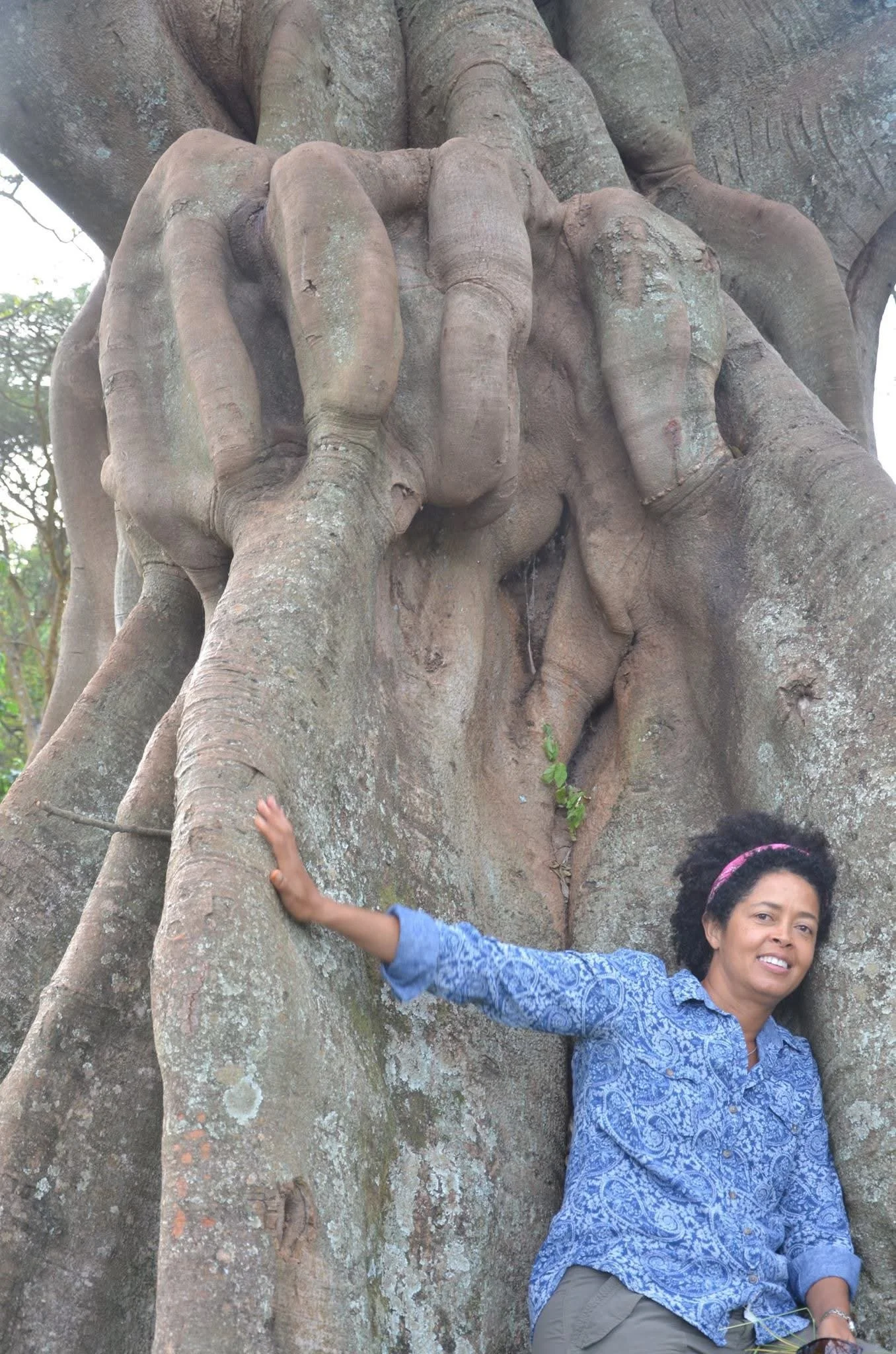
"On the ragged edge of Nairobi, where the city gives way to the wilderness of Nairobi National Park, stands an ancient fig tree. She is vast, muscular, and rooted in the red soil, a queen of the landscape. By all accounts, she may be five centuries old. At first glance, she is just a fabulous climbing tree, the kind that draws children up into her arms. But if you pause long enough, she becomes something more. I learned this one day over tea with my landlord John Keen. He was a man with several wives and houses in one compound, and every few months I would be hosted by a different wife. On this occasion I was welcomed into the home of Mama Silole. Her daughter, Silole for whom the Silole Sanctuary bordering the park was named. When I told Mama Silole of my plan to bring a group of schoolchildren to sit under the tree in silence, to simply watch and feel, she nodded knowingly. “I know why you love this tree,” she said. “You found the elephants.” Puzzled, I asked, “What elephants?” She smiled: “Go to the tree. You will see them.” And so I did. At the base, a family of warthogs exploded out of a burrow like cannonballs, nearly stopping my heart. Once I recovered, I circled her trunk slowly, searching. At first, I noticed only the ropes and folds of her bark. Then, like a veil lifting, they appeared, herds of elephants, tusks raised, marching eternally down her body. They seemed animated, sculpted by time itself, as if this tree carried the memory of migrations in her very skin. But this tree holds more than elephants. She has stood sentinel through the great tides of Kenya’s history. When she was young, the Maasai ruled these plains, moving their herds between rivers, sharing the land with lions and rhinos. Traders passed nearby, some with ivory, others with enslaved people bound for the coast. She witnessed caravans of suffering moving eastward, long before the city of Nairobi even existed. In the late 19th century, strangers arrived from across the sea. The British cut their way into the highlands, and with them came surveyors, soldiers, and the “iron snake” the Uganda Railway. Smoke and steel split the savanna, and a railway depot rose near her roots. From that depot, Nairobi was born, first a swampy outpost, then a dusty township, and finally the capital of a colony. Through the World Wars, she watched young Kenyan men conscripted to fight in lands they had never heard of Asia, Europe, the deserts of North Africa. Some returned broken, others never returned at all. Through the Mau Mau years she stood in silence as forests were burned, as people were driven into villages under barbed wire, as cries of rebellion echoed across the land. When independence came in 1963, she had already seen centuries of struggle, and now she witnessed the raising of the black, red, green, and white flag. Through all of this, she has remained a witness, a guardian, a library of memory. Generations of egrets and storks have nested in her branches. Leopards have crouched on her comfy sofa like branches. Children have climbed her limbs and felt her steady embrace. Even now, she continues her quiet work. Just last week, while I was far away in New York, the Friends of Nairobi National Park gathered beneath her canopy. That image, young people coming together under her shade, as they have for centuries, to honour nature. It reminded me that she still inspires, still gives shelter, still loves us. The fig tree with no name. The one who carries elephants in her bark and history in her heart. I visit her from time to time, and I aways see something new."
- Paula Kahumbu
-
![]()
"The Cedar Tree The sounds of the train echoed in the distance. But, I focused on the sounds in closer proximity, like the chickadees chirping, and the wind blowing. I looked up at the canopy, it was full of dark chestnut branches reaching out like arms, extending into smaller sections. The sun shone through the lush leaves, it was a perfect day. I felt the grooves of the bark under my fingertips, and could smell a faint scent of pine, freshly covered with dewdrops. "Hey! Up here!" My gaze shifted above me. Lounging on the thick branch was my cousin, her brown hair illuminated by the sun's glow. "Bet you can't catch me." She chuckled. She scaled up the tree reaching for the firm branches above, and I soon followed. I placed my foot on the indents of the thick trunk, a little uneasy at first. I leaned in and clutched the next branch tightly. I finally lifted my body off the ground and onto the U shaped branch my cousin had left a moment ago. I gripped the trunk tightly, looking down already. I gulped, it seemed so high. I heard her laughs from above, and I continued my ascent to the top. With each foot and arm, my body worked in a rhythm with my breath. And it didn't seem so scary anymore. I didn't worry about what was on the ground, just what was ahead of me. I had my left foot steady on a thick branch, but I was lifting my right to the next one, it was a little thinner. Suddenly, as I stepped my right foot down, I heard a snap. The small twig like arm plummeted to the ground. I winced, closing my eyes as I heard the thump. I clasped the trunk as tight as I could, with both my arms around the rough edges, almost as an embrace. I slowly looked down. I was frozen. I didn't know how I got up so far, but i don't think I could get down. "Help!" I yelled to my cousin above. She stared down at me, unfazed. "You okay?" I nodded swiftly, but I didn't move. She noticed and climbed down to my branch like it was a breeze. We stood together on the branch for a moment. We looked up together. The branches just seemed to get smaller and smaller. "I don't know if I can do it." I toldher, still holding on. She looked at me, Her hands reaching up to firmly grip the branch. "It's steady, see?" I watched in awe she pushed her hands down, using her body weight to lunge herself up. She turned around with ease. She reached her hand out. "Just breathe, let your body do the work." I nodded, taking her advice. I took a deep breath, feeling the air enter my lungs, and slowly out. I felt determined. I loosened my grip on the trunk's bark, before letting go fully. I stood for a moment, regaining my balance, before accepting her hand. She helped pull me up, along with me using my legs to propel my body up. Finally out of breath, I met her on the new branch. Filled with confidence, We looked at each other grinning. "Let's do this. Together." She said. We continued through the tree with ease, all my worries finally washed away. Together we were careful picking each new branch to step on, testing them out before fully moving ahead. As i reached the final branch I could stand on, I looked out across the horizon. My eyes were met with the sparkling sea, waves crashing along the rocky shore. I had conquered my fear of heights and was rewarded with the most beautiful view. We stayed up there on that cedar tree for a long time. We watched the sun melt into the ocean, I could've stayed up there forever."
- Miranda Karlsgodt
-
![]()
"There is a lone tree in part of my front yard and it's my favorite tree because out of all the many trees around my house, it grows it's leaves before any other and it was my grandmother's favorite tree too."
- Anonymous
-
![]()
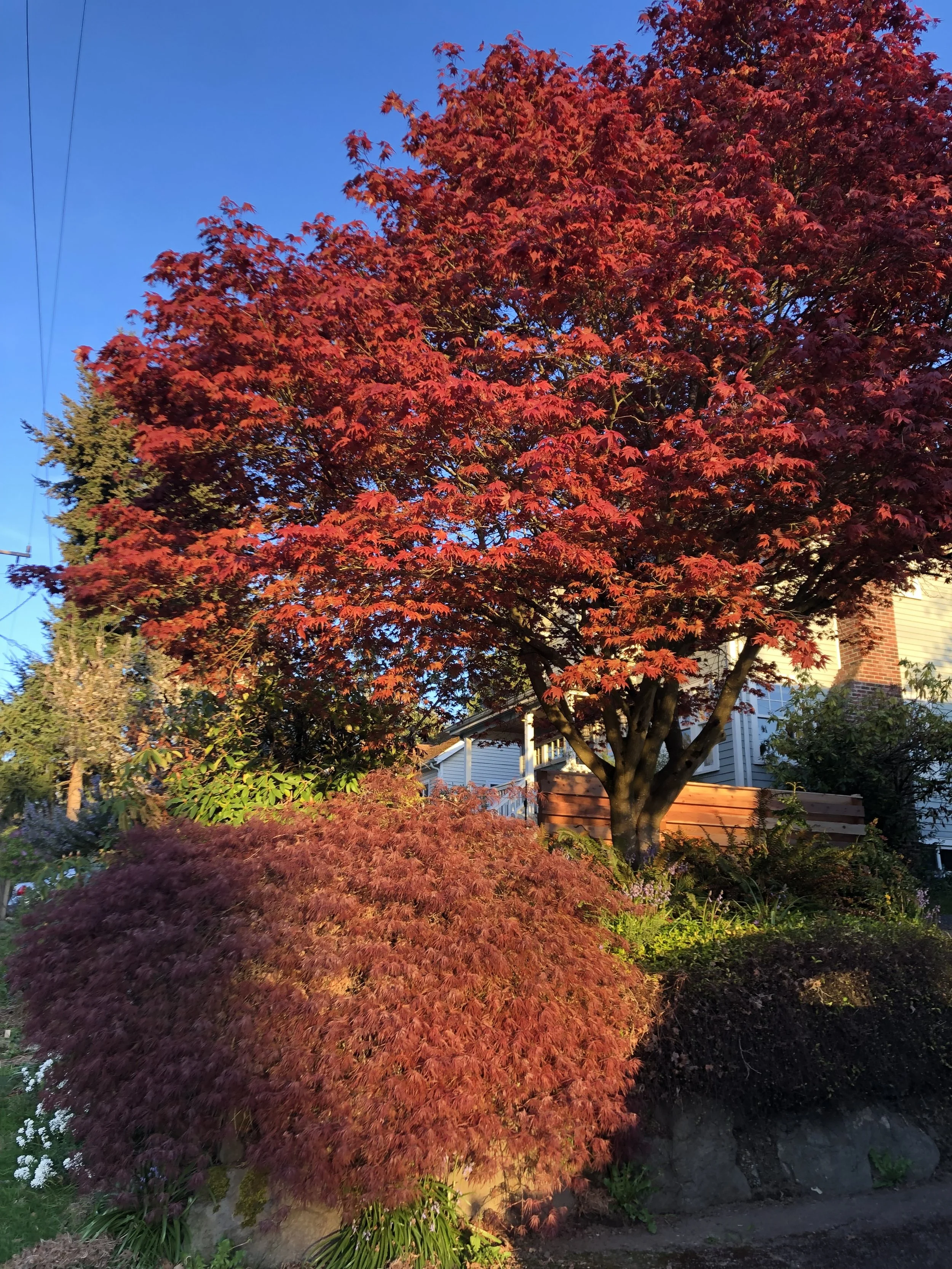
"Our front yard Maple tree holds many beautiful memories for me. I enjoyed when my adventurous kids climbed it and spent time in it during the summer when they were little. I also have a photo of our beloved family cat sitting in it. It was his favorite tree. We miss him, he’s been gone a few years now. The beautiful bright red leaves in the fall continue to bring me joy over the years as I look out our big windows. I curiously watch the chickadees as they flutter about in the tree foraging for insects and chattering to each other. I’m thankful for this tree. I’m thankful for the opportunity to see the change in seasons right out our window."
- Christi
-
![]()
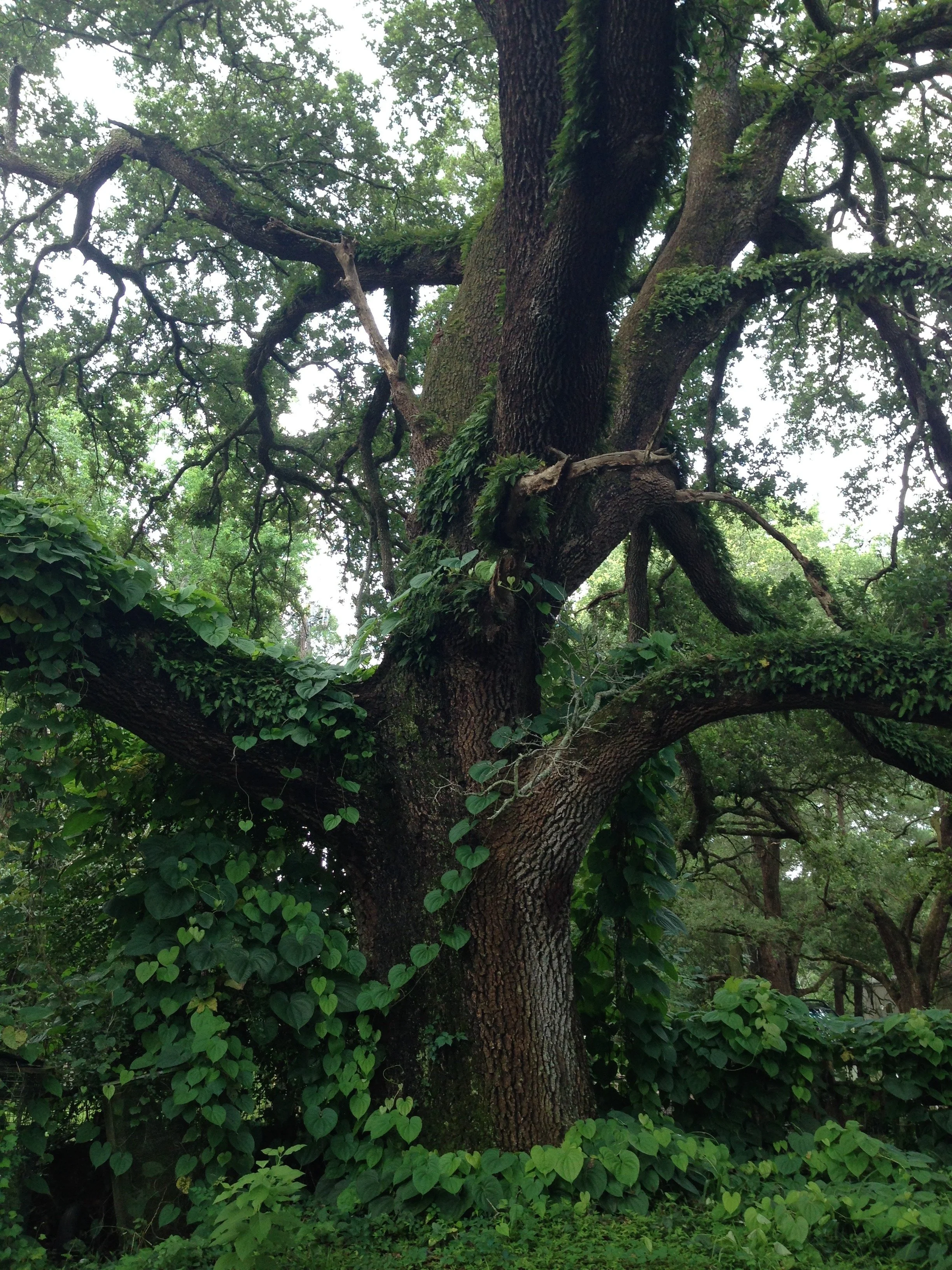
"Live oak in Cleveland Texas at my grandparents house; site of many a happy hour nestled between its welcoming roots playing with my brother and cousins Jimmy and PeeWee. Has survived long after the loss of many of us, watching over us with love and compassion."
- Sue Taylor - Seattle, WA
-
![]()
"Back home in Kongsberg, in Norway, the town is surrounded by forest. 400 years ago, when the town was built, there was just trees there. Growing up there made me so aware of the trees and what they do for us. Not just on a global level, but locally too. I lived right next to the woods, our school was so close we’d run around in it during recess, and getting older I’ve always loved to walk in the woods for the sights and sounds, or to pick berries or mushrooms. You might not know this, but Norway struggles a lot with deforestation. Recently, we have seen that every local part of the government builds down the forest, without regard for nature. There is no national registry for the use of land, so we didn’t even know how much forest we were losing every single year. Kongsberg is no exception, and I’ll tell you, you don’t realise what the trees do for you before their gone. When I was born they used to say that the wind never blew in Kongsberg, and at the time it was almost true, but from around the time I was 13 we have gotten more and more wind. Today the wind blows almost every day. A teacher of mine that I’m very fond of told me once when I was visiting her, that their street had collectively decided to cut down all the tall 100+ year old trees, so that they would get more sun on their terraces. She said no, because she loves her tree, and over night they noticed just how much more windy it was. Even for her. Around the same time that the wind started to be more noticeable, we also got more rain. Or that is, we didn’t have as many trees that could store water in their roots. Every year it gets worse. The rain comes more and more concentrated, because of climate change and storms, and we have less and less capacity. My grandfather told me once that they wanted to cut down these beautiful, and truly massive birches outside his work. They didn’t, luckily, as he told me that the birch trees store more water than any of the other trees. These very old trees, he said, have roots straight into the river, and they drink 100s of liters every day. Without those trees, that whole area around the river would be under water and would have crumbled without the structural support of the roots. When I learned all this, it gave me a new perspective on nature and why we need it. Deforestation isn’t just a problem in the Amazon far far away, because it makes the earth warmer. It’s a problem here and now. People forget how essential the trees are to our ecosystem and to us. They think they are just some plant that is there, but they shelter us and keep us safe, they store water for the earth, and they nourish plants and animals alike. That’s why every time the politicians in town want to build a new parking lot or anything in nature, I’m there telling them what the trees mean to us. They always forget what they do for us, but I will always remind them. Our trees are worth fighting for. They have sheltered us and nourished our earth. Now it’s time for us to shelter and nourish them. I sincerely believe that trees alone could fix our climate, because they really do all that."
- Oskar Løwer Nordgård
-
![]()
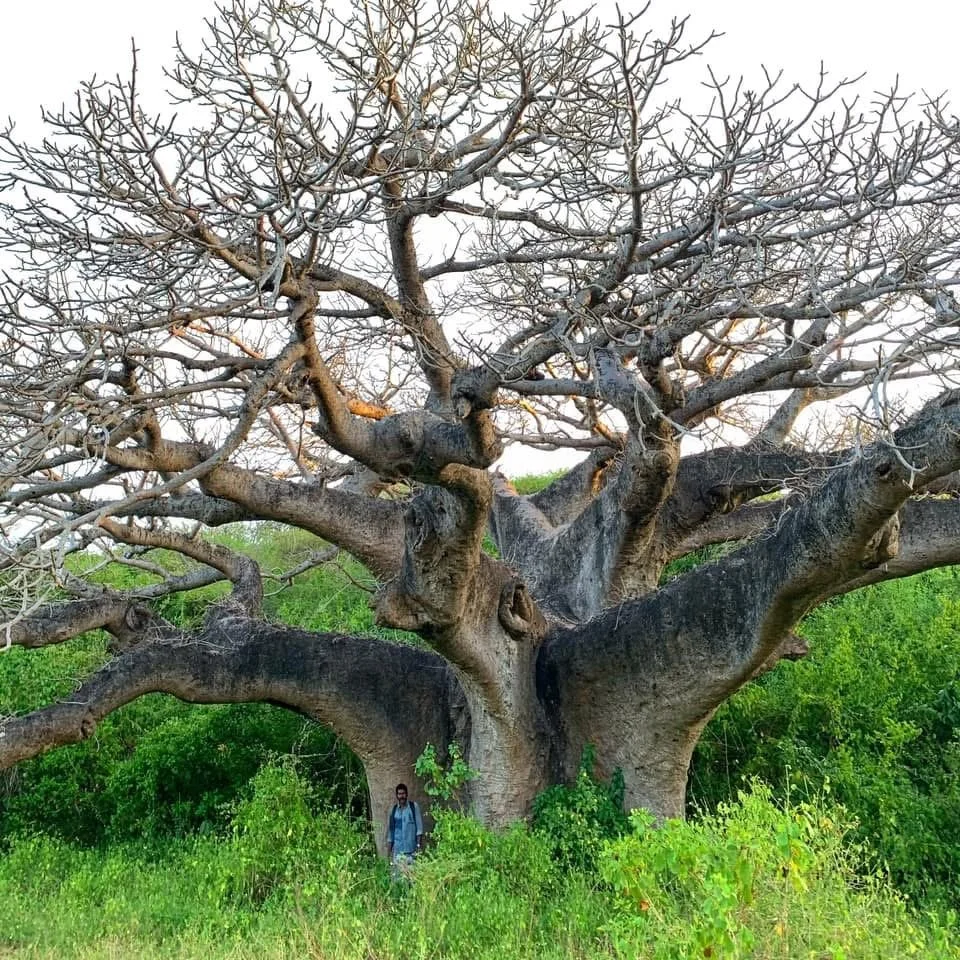
"Metakilili and the spirit of the baobab Mekatilili wa Menza and the Baobabs: Guardians of Resistance and Memory When the British turned their gaze to the fertile lands along the Sabaki River in the early 1900s, they found an unlikely adversary: an elderly widow with an unshakable will. Mekatilili wa Menza, born Mnyazi wa Menza, rose to defend her people, the Giriama, against colonial taxation, forced labor, and the attempted erasure of their culture. She walked from village to village performing the solemn kifudu dance to gather crowds, urging her people to refuse British demands. Alongside medicine man Wanje wa Mwadorikola, she helped administer binding oaths in the sacred kaya forests, swearing communities to resist. Arrested and deported in 1913, she escaped, returned, and was rearrested—each time re-emerging with greater legend. When war erupted in 1914, the Giriama, inspired by her defiance, rose in arms against the colonizers, even burning the District Commissioner’s camp. By the time she was released in 1919, Mekatilili had become a living symbol of Kenyan resistance. Mekatilili’s spirit lives on in the coast’s sacred landscapes—especially the kaya forests, where colossal baobab trees stand as silent witnesses to centuries of struggle, ritual, and renewal. Baobabs: Trees That Remember Baobabs (Adansonia digitata) are no ordinary trees. Massive “upside-down trees,” that live for a thousand years or more, their swollen trunks store tens of thousands of liters of water, and according to myth, the spirits of our ancestors. Their vitamin-rich fruit (mabuyu) are still served to children as sweets, fiber stripped from self healing bark is twisted to twines used in basketry, and their cavernous hollows shelter owls, bees, bats, and small mammals. Today baobab seeds crushed to powder are exported as a superfood, confirming what the locals always knew - these trees are nutritious treasure troves. At night, the trees bloom with showy yet ghostly white flowers that open for just a few hours, luring fruit bats that pollinate them. To the Mijikenda, they are also spiritual elders, part of the cosmology that Mekatilili defended with such passion. The Mekatilili Baobab, Lost to Floods In May 2024, after weeks of torrential rains, the Sabaki River burst its banks. Among the casualties was an 800-year-old baobab, long known locally as the Mekatilili Baobab. Its massive trunk was torn from the soil and swept downstream, a haunting sight in the floodwaters. For many along the coast, it felt like losing a grandmother. Tour guides mourned the loss of a landmark; elders grieved the silencing of a living witness. In an era of climate disruption, the fall of this baobab was more than an accident of weather, it was a warning. Outrage Over the Uprooted Baobabs of Kilifi Even as Kenyans were mourning flood-felled giants, another wound was being inflicted. In 2022, news broke that ancient baobabs in Kilifi were being uprooted and exported to a Georgian billionaire’s private dendrological park. The revelations sparked outrage. I joined other environmentalists, artists, and local leaders denounced the practice, stripped of Baobabs, landmarks of Kilifi are visibly missing. For the Mijikenda, uprooting baobabs without consent desecrated cultural heritage. Critics called it biopiracy: the theft of ecological and spiritual patrimony for private spectacle. Government officials at first halted the exports, then declared the permits valid, arguing the trees were not legally protected and that land owners were paid handsomely. But the public debate laid bare deeper questions: Who owns heritage? Can priceless beings be commodified? The final chapter is telling. By mid-2024, reports confirmed that all eight baobabs shipped to Georgia had died. Transplanted across continents, ripped from the soils and spirits that sustained them, the elders could not survive. What began as a scandal ended as a cautionary tale. Baobabs are iconic ancient trees, they feed and nurture people and other beings, and are the source of the superfood baobab powder. Deep rooted they are resilient against climate change, and importantly they serve in Cultural Continuity: They anchor ceremonies, stories, and identities—the living memory of entire communities. In Mekatilili’s Spirit Mekatilili’s defiance was about more than taxes or labor, it was about defending a way of life rooted in land, ceremony, and kinship with trees. Today, as rivers rise and as chainsaws bite at elders destined for foreign shores, her lesson resounds: we protect what holds us up. The baobabs remind us, as Mekatilili once did, that culture, land, and resistance are inseparable. To lose them is to lose ourselves."
- Paula Kahumbu
-
![]()
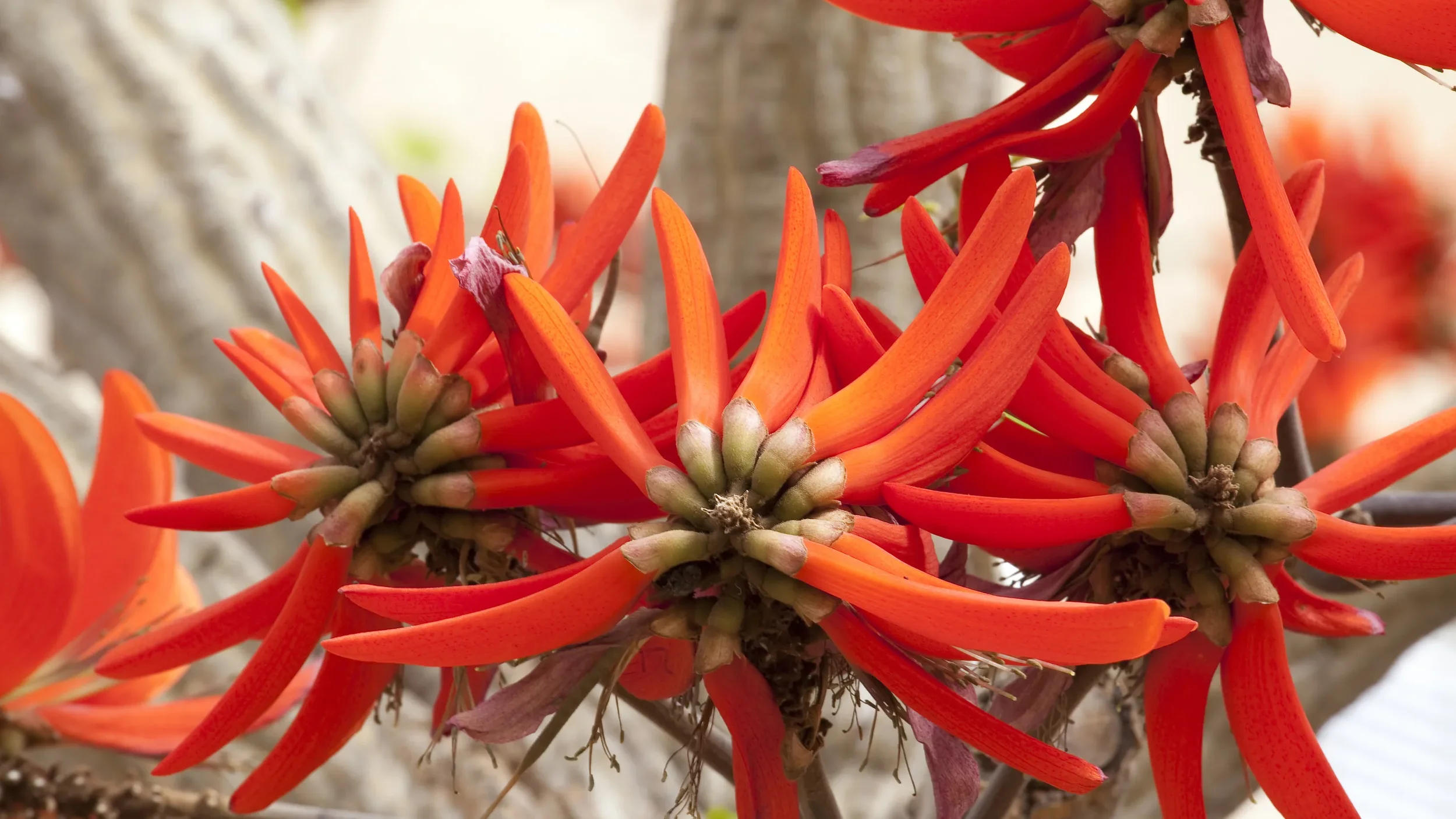
"Once as a child, my mum introduced my sister and I to a 'Lucky Bean Tree' on Milima Road. (I believe it's a species of flame tree). She told us how the little red beans/seeds with a black spot were very lucky. From that day we loved going on walks to the lucky bean tree down the road to collect lucky beans. It's one of my oldest and fondest of memories and started a life long affinity for trees."
- JD
-
![]()
"I teach second grade at an elementary school in the greater Seattle area. Our Title-1 school is home to 650 students who collectively speak 49 world languages. I've been a teacher there for 25 years and I actually attended the very same school as a child, myself. This brings me to my friend Esperanza, the tree outside my classroom window, that has been part of my life for over forty years. When I was seven, Esperanza was my refuge. I would sit in her shade during recess, my back against her trunk. She was my quiet thinking spot as I grappled with grief that I did not yet know how to express. Fifteen years later, I returned to the same school as a brand new teacher… and there she was! She was older and fuller, but still the same tree. It felt like coming home to an old friend who had been waiting for me. Now, every day, my students and I look out at Esperanza. We study her seasonal changes, hold our classroom meetings in her shade, and I tell them stories about the little girl who used to read under this very same tree. They're mesmerized by this idea—that their teacher was once their age, in this same place, with this same tree watching over us both. Esperanza has become our bridge across time—not just human time, but ecological time. She's proof that some relationships transcend decades, that place holds memory, and that we're all connected by the quiet witnesses who measure time in seasons, not seconds. This relationship with Esperanza changed how I teach. I realized that if a tree could hold decades of my story in her rings, my students could understand their own lives the same way. Now, instead of asking students to document their seven years of life on a timeline—that Western arrow marching forward—we create their life stories in concentric circles, like tree rings. They work with their families to map their experiences: birth date in the center, each year spiraling outward with first steps, new siblings, moves between countries. We mark hardships and grief as scars—because like trees, we all carry our difficult seasons and grow around them. What happens is profound. When a student share about his family fleeing Ukraine during his third ring, and another shares about losing their grandmother in their sixth ring, they're not just sharing facts—they're sharing the layers that make them who they are. They begin to see resilience not as bouncing back, but as growing around the hard places. Just like Esperanza does. Esperanza has taught me that some of the most important relationships in our lives aren't always with people. Sometimes they're with the steadfast witnesses who hold our stories—who knew us as children and watch us become who we're meant to be. When I look at her now, I see my past, my present, and all the children yet to come who will learn in her shade. She reminds me that growth isn't linear—it's layered and every ring matters."
- Jennie Warmouth